
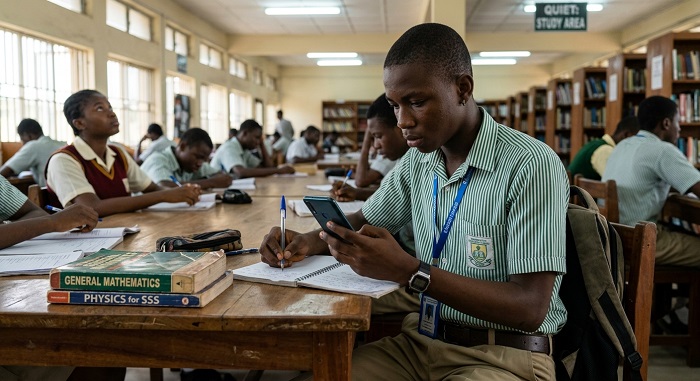
A smartphone can be a distraction—or it can become a powerful classroom in your child's pocket. The difference is how it is used.
Smartphones have become part of everyday life, and many Nigerian students have access to one. While concerns about excessive screen time, social media and gaming are understandable, smartphones can also provide students with useful tools for learning when used responsibly.
The real question isn't simply, “Should students use smartphones?” but rather, “How can smartphones be used to support learning?”
📱 Instant Access to Information
Students can use smartphones to research topics they don't fully understand. Educational websites, digital libraries, dictionaries and other learning resources can provide explanations beyond what is available in a textbook.
For example, a student studying the solar system can watch an educational animation, read additional information and explore interactive resources—all within minutes.
🎥 Learning Can Become More Interesting
Not every child learns best by simply reading a textbook. Educational videos, diagrams, simulations and interactive quizzes can make difficult concepts easier to understand.
A complicated science topic can become clearer when a student sees it demonstrated visually. Similarly, language-learning apps can help students practise vocabulary and pronunciation.
🧠 Smartphones Can Support Independent Learning
One of the greatest benefits of technology is that students can take greater responsibility for their learning. When they encounter a difficult topic, they can search for explanations, practise questions and explore different learning materials.
This encourages curiosity, problem-solving and independent thinking—skills that are valuable far beyond school.
⏰ Useful Tools for Organisation
A smartphone can also help students stay organised. Calendars, reminders, note-taking apps, calculators and educational planners can help them manage assignments, revision schedules and important school activities.
Instead of forgetting that an assignment is due tomorrow, a student can set a reminder today.
⚠️ But There Is a Catch
Smartphones can easily become distractions. Social media notifications, games, entertainment videos and chatting can quickly take attention away from schoolwork.
There is also the risk of students encountering unreliable information online. Not everything found on the internet is true or appropriate for children.
That is why students need guidance on digital responsibility, online safety and how to identify trustworthy sources.
🏫 The Right Balance Matters
Smartphones should not replace teachers, textbooks, practical activities or face-to-face interaction. Instead, they should complement them.
Schools and parents can establish clear rules about when and how smartphones may be used for academic purposes. Students should also learn to put their devices aside when technology is no longer helping them learn.
📚 Technology Is a Tool—Not the Teacher
A smartphone is neither automatically good nor bad for education. Its value depends on how it is used.
Used wisely, it can help students research, practise, create, communicate and discover new ideas. Used carelessly, it can become a major source of distraction.
The goal isn't to keep students away from technology. It is to teach them how to use technology responsibly, intelligently and purposefully.
Give a student a smartphone without guidance, and it may become a distraction. Give that student digital skills and discipline, and it can become a powerful learning tool.
No comments yet. Be the first to share your thoughts.
Comments 0
Share your thoughts about this story.